How Many Porta Potties Do I Need Under OSHA Rules?
Start with the headcount on your busiest shift, not your average day. OSHA 1926.51(c)(1) is built around peak workers on site, so a Brooklyn Park framing crew that swells to 35 people on a pour day needs to plan for 35, not the usual 15. That means two toilet seats and a urinal, since 35 falls between 20 and 40. Add distance into the plan too: field crews spread across a large lot should not have to walk more than a few minutes to reach a unit. If you are unsure how the math works for your crew size, this walkthrough on how many porta potties you need breaks it into simple steps, and Brooklyn Park Porta Pros can size a site for you over the phone. General industry sites, as opposed to active construction, fall under a different ratio in 29 CFR 1910.141(c)(1)(i), so a warehouse buildout and a road crew are not counted the same way. Get the classification wrong and you either overspend or underserve. Some companies operating across state lines also ask about cal osha portable toilet requirements or cal osha portable toilet requirements construction specifically, since California runs its own state plan separate from federal OSHA. Most contractors we work with in Brooklyn Park order standard portable toilet rental units and add one extra per 15 to 20 workers as a buffer against downtime during cleaning.
What Does OSHA Say About Handwashing and Water on Site?
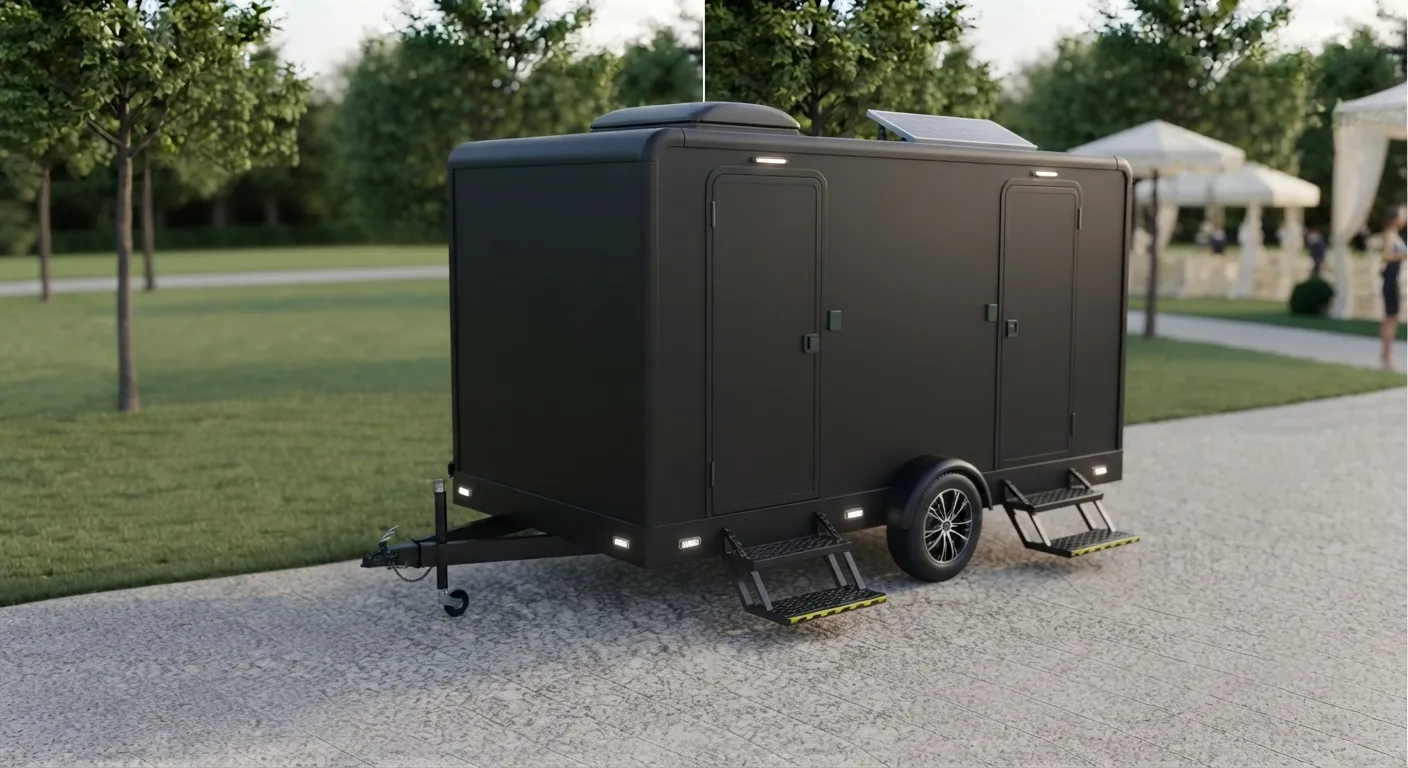
OSHA 1926.51(a)(1) requires an adequate supply of potable water at every job site, full stop, no exceptions for small crews. That is separate from toilet counts. If your crew is applying paints, coatings, herbicides or insecticides, OSHA 1926.51(f)(1) kicks in and requires washing facilities specifically because of those contaminants, not as a general rule for every trade. Framers and dumpster-adjacent laborers do not automatically trigger that clause; painters and pesticide applicators do. Separately, 29 CFR 1910.141(d)(2) requires soap and towels or a hand-drying device at washing stations, and it is explicit that hand sanitizer alone does not satisfy that. A lot of Brooklyn Park crews pair their toilets with a handwashing station rental or a portable sink rental to cover both the water requirement and the soap-and-towel rule in one setup. If you are staging a farm crew instead of a construction site, OSHA 1928.110 covers field sanitation separately, with a facility required within a quarter mile walk for hand-labor employees, which matters for farm and agricultural restrooms work around Brooklyn Park.
Are There Distance or Placement Rules for Portable Toilets?
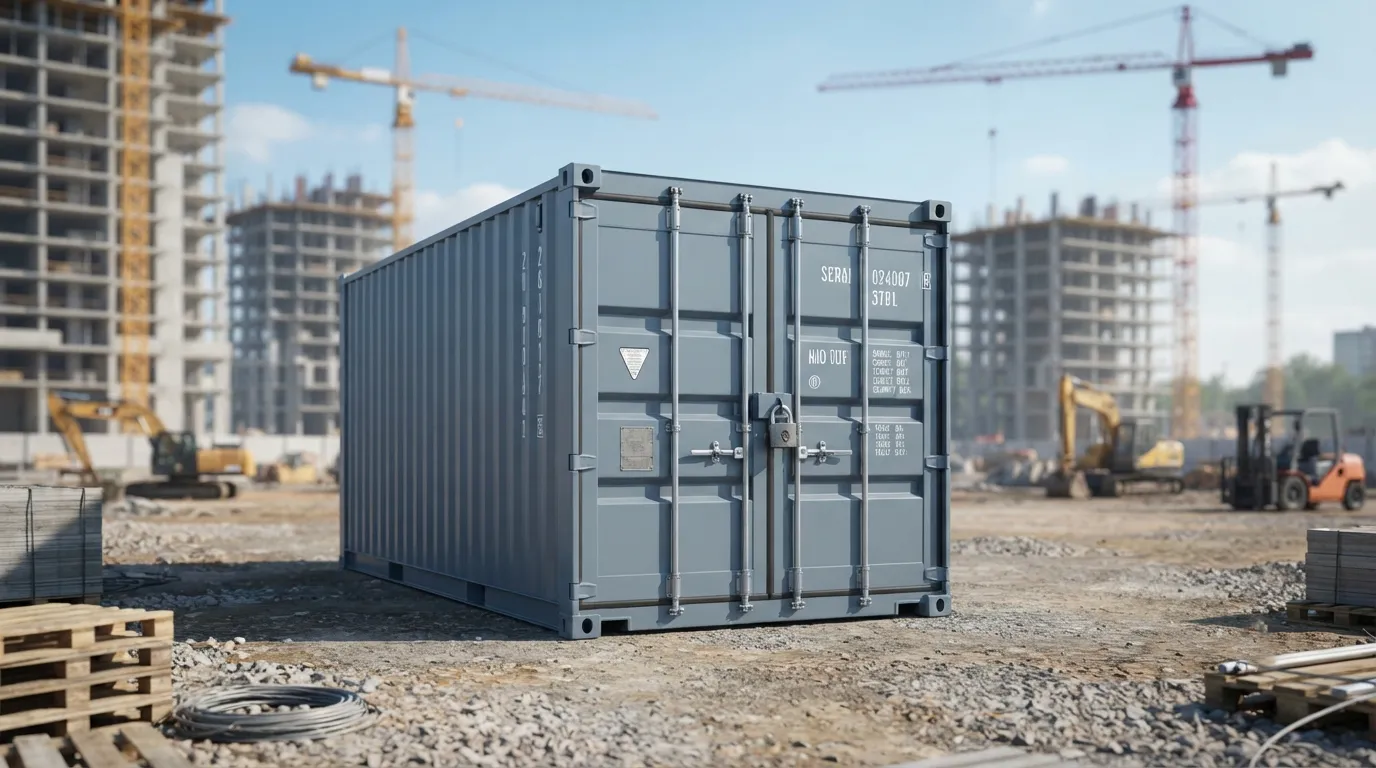
OSHA does not publish a strict foot-measurement for how far a toilet can sit from a work area, but the standard assumes reasonable proximity so workers are not skipping breaks to avoid a long walk, which is the closest answer to osha portable toilet distance requirements you will find in the regulation text. Practically, that means placing units near the densest cluster of labor, not at the edge of the lot for convenience of pickup. ADA Standards section 403.5.1 calls for a 36 inch clear route to any accessible unit, and section 405.2 caps ramp slope at 1:12 if the ground is uneven, both worth checking before delivery day. If your site sits near Brooklyn Center, about 3.8 miles southeast, or you are running a job that stretches toward Champlin, 6.5 miles northwest, plan placement around where crews actually cluster, not just where the truck has room to back in. A porta potty placement guide walks through firm ground, wind direction and service access, and our roll-off delivery trucks need about 60 feet of straight clearance behind them, so plan toilet placement apart from that lane. Confirm any right-of-way placement with the City of Brooklyn Park before setup, since curb and boulevard rules are not something we can verify without checking site by site.
Do ADA Rules Apply on Construction Sites Too?
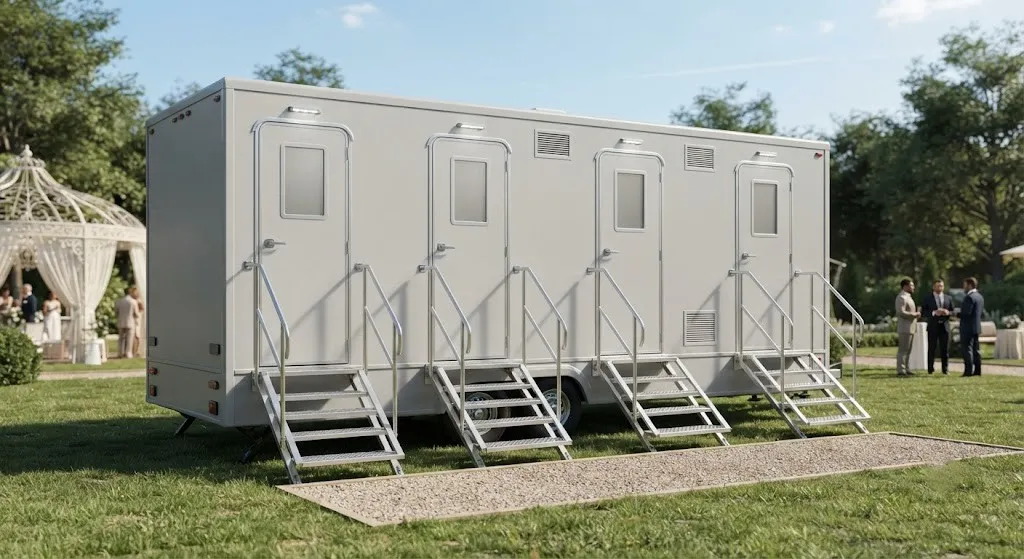
Yes, and it is easy to miss. ADA Standards section 213.2 requires that where single-user portable units are clustered, at least 5 percent must be accessible, with a minimum of one unit regardless of headcount. That applies to public-facing sites and events as much as active construction with public visitors. An accessible unit needs a 32 inch clear door opening under section 404.2.3, a 60 inch turning circle under section 304.3.1, and a stable, slip-resistant floor under section 302.1. Reach ranges matter too: section 308.2.1 sets a 48 inch maximum and 15 inch minimum for forward reach, and section 309.4 requires operable parts that need no tight grasping and no more than 5 pounds of force. If your Brooklyn Park project includes any public access, whether it is a road project near Fridley, 8.3 miles southeast, or a permitted event downtown, budget for an ADA accessible porta potty alongside your standard units, and see ADA restroom requirements for the full breakdown before you finalize a count. Crews searching portable toilet rental oshawa or storage container rental oshawa from outside our service area should note this page covers Brooklyn Park, MN and the nearby Minnesota communities we deliver to, not Oshawa, Ontario.
| unit | day | week | month |
|---|---|---|---|
| standard | $100 to $350 | $130 to $500 | $125 to $325 |
| ada | $200 to $400 | $240 to $400 (weekend rate available) | not offered |
| deluxe | $85 to $1200 | $150 to $290 | not offered |
Rates vary by crew size and rental length, and a porta potty rental cost breakdown or a monthly porta potty rental quote from Brooklyn Park Porta Pros will nail down your number faster than estimating from a table.
Frequently asked questions
Does OSHA require a specific number of porta potties for a small crew?
Yes. Under OSHA 1926.51(c)(1), a construction crew of 20 or fewer workers needs one toilet facility, period. Once you cross 20 workers, the ratio shifts to one seat and one urinal per 40 people, up to 200 workers on site.
Is Cal OSHA different from federal OSHA for portable toilets?
Cal OSHA has its own construction sanitation rules, but this page covers federal OSHA standards, which apply in Minnesota. If your company operates in California too, check that state's specific requirements separately rather than assuming federal ratios apply there.
Can I use hand sanitizer instead of a handwashing station?
No. 29 CFR 1910.141(d)(2) requires soap and towels or a hand-drying device at washing facilities. Sanitizer does not meet that standard on its own, so pair your hand sanitizer station rental with an actual sink setup for compliance.
How far can a porta potty legally be from the work area?
OSHA does not set an exact distance, but the standard expects reasonable access so workers are not discouraged from using it. Placement should prioritize proximity to where labor is concentrated, checked against firm, level ground and clear delivery access.
Do event sites need the same porta potty ratio as construction sites?
Not exactly. Event sanitation planning uses headcount and duration rather than the construction ratio in 1926.51(c). See event restroom rental or festival restroom rental for guidance suited to public gatherings instead of job sites.
Next step
Get a delivery date
Tell us the address, the dates and the headcount. We size the order and confirm the route.