How many restrooms does a county fair need?
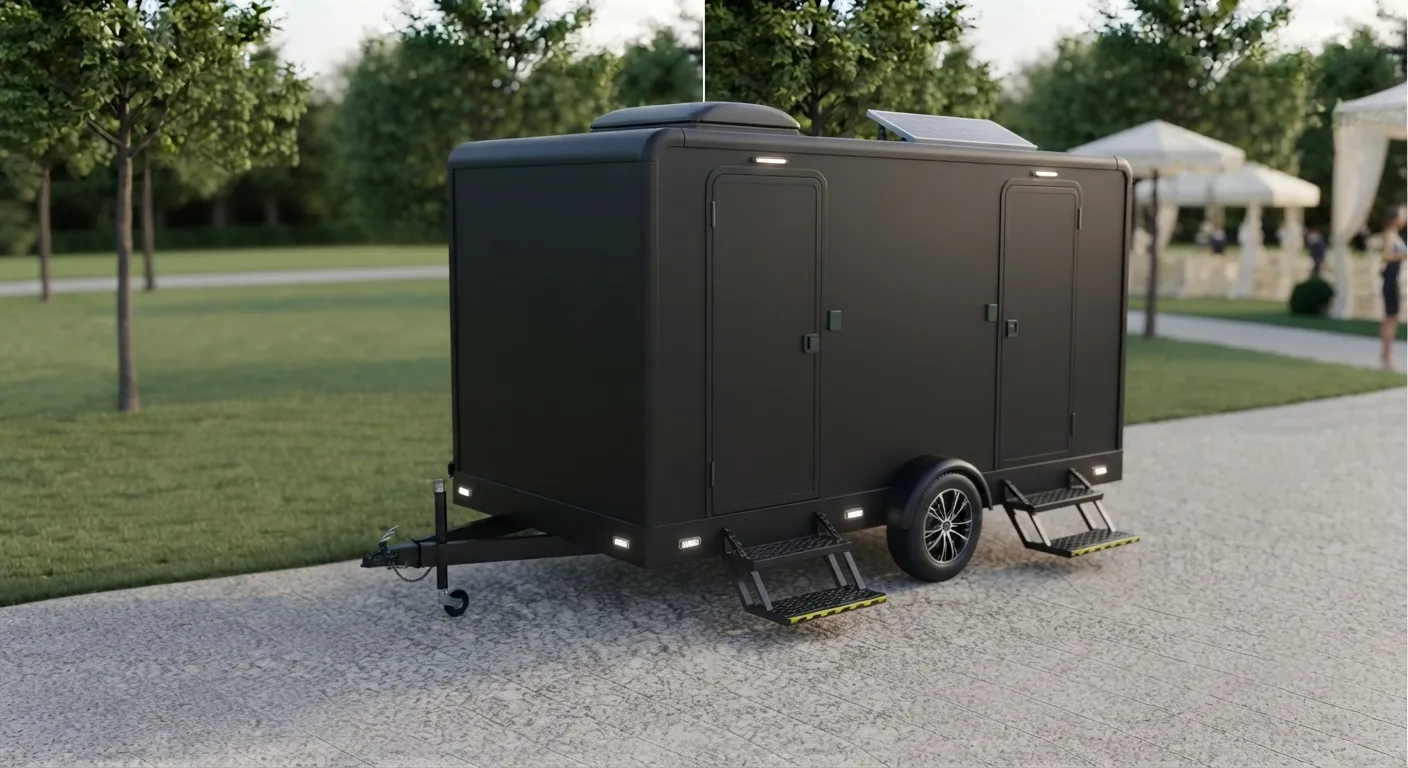
Start with attendance, not acreage. OSHA 1926.51(c) sets construction ratios at one toilet for 20 workers or fewer, and fair crowds behave differently than job sites, but the same logic applies: more people, more fixtures, tighter service intervals. ANSI/PSAI Z4.3 sets a baseline service interval of one visit per week for up to 10 users across a 40 hour week, which tells you fairs with thousands of daily visitors need a servicing plan built for the event, not a leftover job-site schedule. A standard porta potty rental works for general grounds coverage. Add deluxe flushable units near grandstands or VIP areas, and stage at least one ADA accessible porta potty per cluster: ADA Standards section 213.2 requires 5 percent of clustered single-user units be accessible, never fewer than one. Each accessible unit needs a 60 inch turning circle inside per ADA 304.3.1, plus a 36 inch clear path to reach it under ADA 403.5.1. Use our porta potty placement guide to lay out clusters near food vendors, midways and parking, and check how many porta potties do I need before you finalize a headcount. For fairs running multiple days, a restroom trailer rental or an 8 stall restroom trailer handles sustained volume better than scattered singles, especially near main stages or beer gardens.
What does a county fair restroom rental cost?
Fair budgets swing on unit mix and rental length, so pin numbers early. A standard unit runs an event-day rate, and multi-day fairs often land closer to a weekend or week rate than a single day price. Delivery adds a flat fee on top of the unit cost, and grounds with tight access may need extra lead time to route trucks in.
| unit | duration | typical | high |
|---|---|---|---|
| standard | event | 400 | 800 |
| standard | weekend | 250 | 400 |
| ada | weekend | 240 | 300 |
| deluxe | week | 250 | 290 |
| delivery_fee | weekend | 200 | 540 |
See the porta potty rental cost breakdown or the porta potty rental per day page if your fair runs a single day instead of a full weekend. Multi-week fairs should compare against monthly porta potty rental pricing before locking a quote. Request numbers through request a quote once you know attendance and grounds layout, since delivery access and unit count both move the total.
Where should restrooms go on the fairgrounds?
Put restrooms where lines will actually form: near midways, food courts, livestock barns and main gates, not tucked behind maintenance sheds. A roll-off delivery truck needs about 60 feet of straight clearance behind it to drop a unit or trailer, so walk the site and flag any gate, fence line or slope that blocks that approach. Brooklyn Park fairgrounds with grass or gravel lots should confirm ground stability, since ADA Standards section 302.1 requires stable, firm, slip-resistant surfacing at accessible units, and a soft lot after rain fails that standard fast. Pair restroom clusters with a handwashing station rental or a portable sink rental near food vendors, since 29 CFR 1910.141(d)(2) requires soap and towels or a hand-drying device at washing stations, not sanitizer alone. Fairs with fenced perimeters often add temporary fence rental or crowd control barrier rental around restroom banks to manage queue flow. If the fairgrounds sit within Brooklyn Park city limits, placement in any public right of way needs confirming with the city; check porta potty permit requirements before finalizing your site map. Fairs pulling crowds from Brooklyn Center, 3.8 miles southeast, or Champlin, 6.5 miles northwest, should plan restroom density around where those visitors park and enter.
Frequently asked questions
How far in advance should we book fair restrooms?
Book as soon as your gate estimate and grounds map are set, ideally weeks out for multi-day fairs. Brooklyn Park events competing for trailers and ADA units during peak fair season fill delivery slots fast, and late orders limit unit selection more than they raise price.
Do we need ADA-accessible units at a county fair?
Yes. ADA Standards section 213.2 requires at least 5 percent of any cluster of single-user portable toilets be accessible, with a minimum of one unit even in small clusters. Grandstands, food courts and livestock areas each count as separate clusters needing their own accessible unit.
Can we get restroom trailers instead of standalone units?
Yes, and multi-day fairs often prefer them. A 4 stall restroom trailer or 2 stall restroom trailer handles steady traffic without the line buildup single units create, and trailers include sinks that meet handwashing needs directly.
How often are units serviced during a fair?
Daily service is standard for high-traffic fairs, well above the one-visit-per-week ANSI/PSAI Z4.3 baseline built for light everyday use. Vendors near food and animal areas often need twice-daily pumping and restocking to keep pace with actual foot traffic.
What if our fair runs into bad weather?
Cold or wet fairground conditions change setup needs, especially for water lines and ground stability. Check porta potty in winter for guidance on freeze protection if your fair runs into late fall, and flag any low or muddy ground during site walks so crews route trucks around it.
Next step
Get a delivery date
Tell us the address, the dates and the headcount. We size the order and confirm the route.