How Do Porta Potties Work?
The design is simple on purpose. A construction worker steps into the unit, does his business, and there is no flush, no pipe, no tank of fresh water waiting behind the wall. Waste drops straight into the holding tank, where the chemical mix keeps it from turning solid and knocks down the smell. Standard porta potty rental covers most job sites and backyard projects around Brooklyn Park. A vent stack pulls odor up and out above head height, away from the door. Once the tank starts getting full, a route truck backs up, drops a hose in, and pumps it dry, then rinses and redoses the chemical before moving to the next stop on the route. ANSI/PSAI Z4.3 sets the baseline service interval at once a week for up to 10 users over a 40 hour week, which is why weekly service is the standard offering, not a special request. Busy sites or events need more frequent visits, which is where emergency porta potty rental or added stops come in.
How Does a Portable Sink Work?
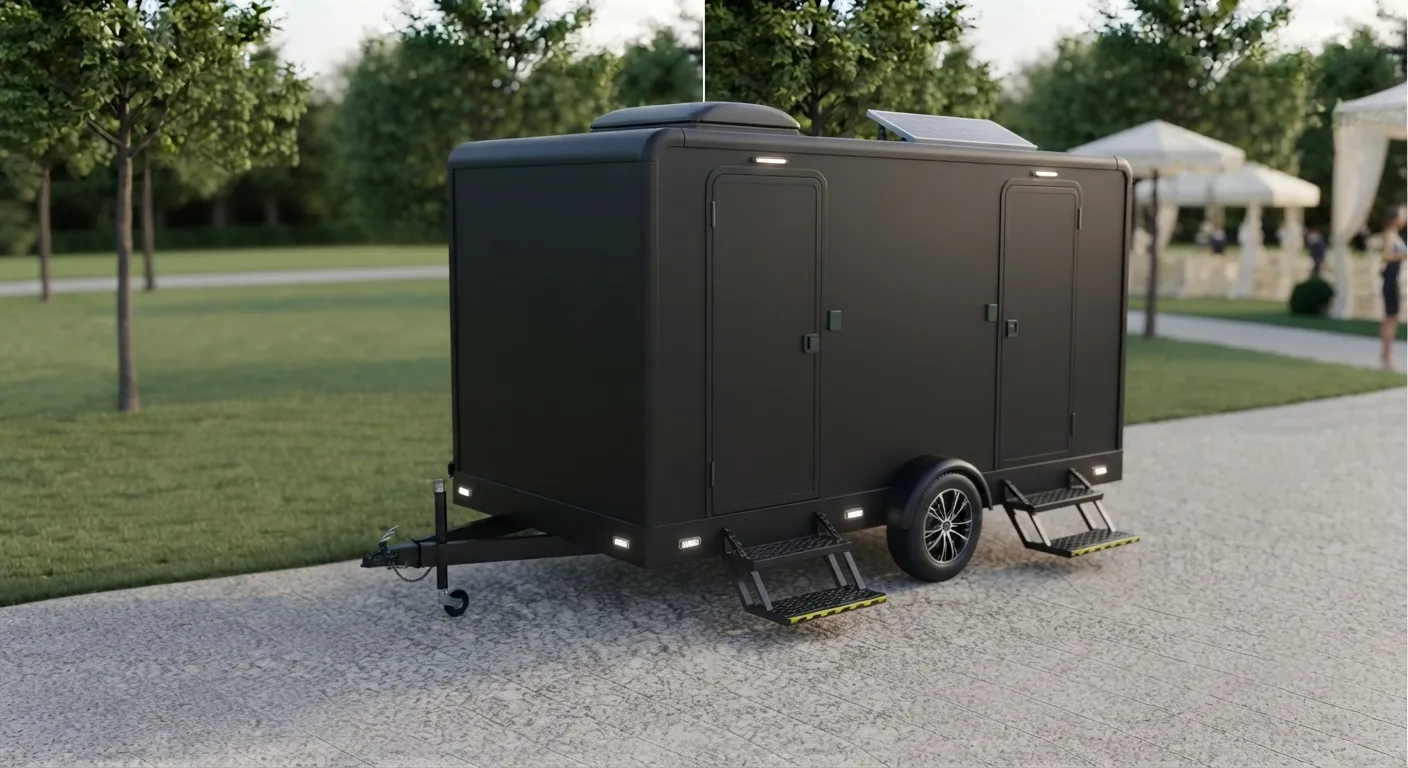
A portable sink runs on its own sealed fresh water tank, usually foot-pumped or battery powered, with a separate gray water tank underneath to catch what drains out. There is no hookup to city water or sewer. Soap and paper towels sit in dispensers built into the unit, which matters because 29 CFR 1910.141(d)(2) requires washing facilities to have soap and towels or a hand dryer, not just sanitizer. Handwashing station rental pairs naturally with any restroom order, and a lot of Brooklyn Park contractors add one automatically. Where crews are applying paints, coatings, herbicides or insecticides, OSHA 1926.51(f)(1) specifically requires washing facilities on site, so it is worth checking handwashing requirements before the job starts, not after an inspector shows up. A portable sink rental is a smaller footprint option than a full trailer and works well tucked next to a restroom bank. For sites that want hands clean without water at all, hand sanitizer station rental fills the gap, though it does not satisfy the towel and soap requirement on its own.
How Do Flushable Porta Potties Work?
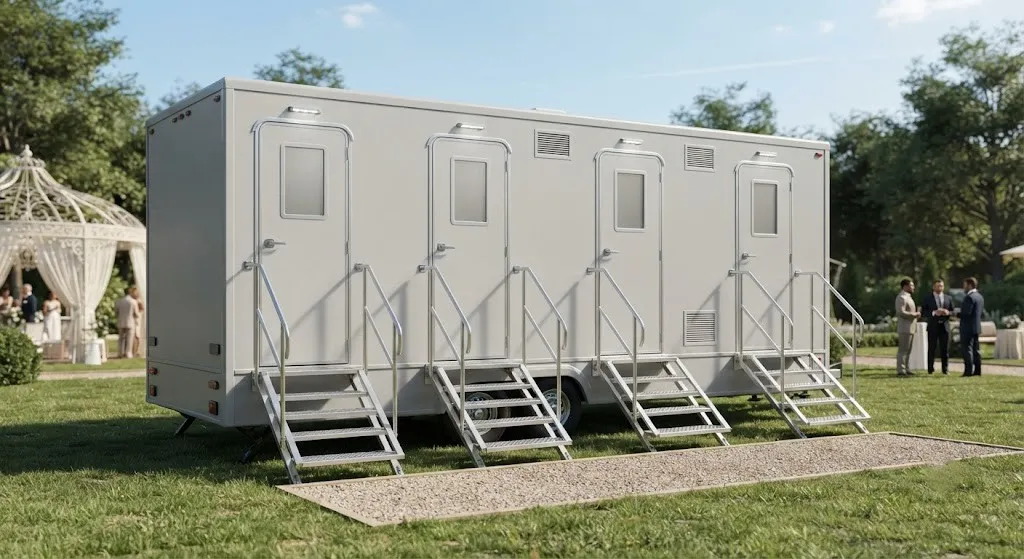
A flushable, or deluxe, unit uses a small onboard freshwater tank and a foot pump or hand pump to push a rinse of water through the bowl after each use, dropping waste into the same style of holding tank below. It feels closer to a home bathroom, and most have a sink built in with its own water supply. Deluxe flushable porta potty units run in that price range for daily and weekly use, higher than a standard unit because of the added plumbing and tank. Weddings and upscale events near Brooklyn Park tend to book these instead of standard units. For events wanting more separation and comfort, a restroom trailer rental or a 2 stall restroom trailer both use the same flush mechanics but run off a larger built-in tank and, in some models, a generator for lighting and water pressure. If you are trying to figure out unit count for a wedding, wedding restroom rental planning guides walk through headcount math.
How Do Camping Porta Potties Work?
Camping units work on the same sealed-tank principle, just scaled down and sometimes swapped for a cassette toilet that the camper empties by hand at a dump station instead of waiting for a truck. For a rented unit dropped at a campsite, the mechanics match a standard job site unit: holding tank, chemical treatment, vent stack, weekly-or-so service. Camping porta potty rentals get placed the same way as construction units, just farther from a paved drive sometimes, and delivery trucks still need roughly 60 feet of straight clearance behind them to position and service the unit. If a campsite or hunting property in the Brooklyn Park area is off a gravel access road, mention that when booking so the driver can plan the approach.
| unit | day | week | month |
|---|---|---|---|
| standard | $100 - $350 | $130 - $500 | $125 - $325 |
| deluxe | $85 - $1200 | $150 - $290 | -- |
| ada | $200 - $400 | $240 - $400 | -- |
Costs vary by unit type and length of rental; see porta potty rental cost or porta potty rental per day for a fuller breakdown, and monthly porta potty rental if the job runs long. Job sites in Brooklyn Park sizing up crew counts should check OSHA 1926.51(c), which sets toilet ratios starting at one unit for 20 workers or fewer. Our ADA accessible porta potty units meet ADA Standards 213.2, which requires at least one accessible unit in any cluster of portables, and the door and floor space follow ADA Standards 404.2.3 and 302.1.
Frequently asked questions
What chemical is used in porta potty tanks?
The blue liquid in the tank is a deodorizing and waste-breakdown chemical, not a disinfectant for the seat or walls. It gets refilled at every pump-out. Searching for "portable toilet chemicals near me" usually turns up rental companies, since the chemical comes bundled with service, not sold separately at retail.
How often does a porta potty get serviced?
Weekly is the industry baseline under ANSI/PSAI Z4.3, built for 10 users across a 40 hour week. Busier sites, festivals, or multi-crew job sites need two or three visits a week. Check how often are porta potties cleaned for the fuller schedule breakdown.
Do porta potties need to be near a water line?
No. That is the point of the design. No water in, no sewer out. A generator or foot pump handles the flush water on deluxe units, and the holding tank handles everything else until pump-out day.
How is a porta potty different from a septic tank?
A septic tank is a permanent underground system tied to a house, typically pumped every 3 to 5 years depending on tank size and household size. A porta potty is a portable, self-contained unit serviced weekly. If you are dealing with a slow-draining home system, septic pumping service is the right call, not a rental unit.
Can I rent a porta potty for just one weekend?
Yes. Weekend rates run higher per day than a full week since the delivery and pickup costs get packed into a shorter window. It still includes one service-ready tank, delivery, and pickup, same as a longer rental, just priced for the short turnaround.
Next step
Get a delivery date
Tell us the address, the dates and the headcount. We size the order and confirm the route.